Wednesday, August 13, 2008

No blood spilled in Lawrence

Not a shot was fired when I addressed a near-capacity crowd in the auditorium of the Lawrence Public Library last night.

Of course, I really wasn't worried, despite the spirited online discussion on the Lawrence Journal-World website following their story about my attempts to "humanize" William Clarke Quantrill, who burned Lawrence 145 years ago this month. A few posters, apparently angry that I had attempted to portray Quantrill as a human being in my novel rather than a monster, had threatened (anonymously, of course) to teach me a lesson during my visit to Lawrence.

Alas, none showed up. I was all prepared to give my "American Bosnia" lecture about the Civil War on the Border.

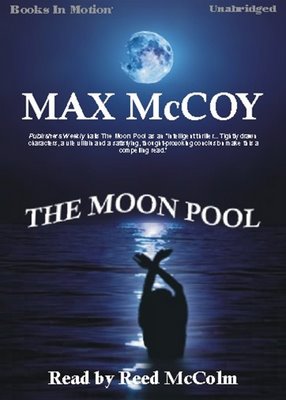
Instead, I got an enthusiastic and particularly well-behaved crowd who listened to me talk about my work for over an hour, then asked terrific questions. That was followed by a book signing hosted by The Raven Book Store, a Lawrence institution and a particularly good place to find a mystery novel or works of regional interest. It was a pleasure to meet Lisa and Heidi, the new owners of the shop, and I hope someday in the not-too-distant future I can bring my characters Richard Dahlgren (THE MOON POOL) or Andy Kelsey (HINTERLAND) back in new adventures so I can have signings there.

I have always believed that public libraries are a vital part of the cultural and intellectual life of any community, and I was grateful for such a good turnout in Lawrence. Thanks are particularly due to library liason Maria, who organized the event and made sure the word got out. Terry Rombeck's story in the Journal-World lead the arts section, and was teased above the flag on 1A. The appearance was part of Civil War on the Western Frontier, which goes through Aug. 21, the anniversary of the raid.

I'll be be back in Lawrence on Saturday, Sept. 21, for the River City Reading Festival. A partial list of other authors slated to appear are Thomas Frank, Michael L. Johnson, Candice Millard, Scott Heim, Scott Phillips, Steven Hind, Jim Hoy, Kevin Rabas, and Denise Low.

Tuesday, August 12, 2008

Another raid on Lawrence

At 7 p.m., if I'm not assassinated, I'm going to speak and sign books at the Lawrence (Kansas) Public Library. The Lawrence Journal-World ran a story today on my appearance, under the head Devil's Advocate: Emporia author seeks to humanize Quantrill. This story has generated dozens of comments on the Journal-World's site, and a surprising amount of passion, regarding my novel, I, QUANTRILL.

Take this post, for example:

This publicity-seeker's 15 minutes of fame isn't going to change (W.E. Connelly's 1910 portrayal of Quantrill). I'll tell you one thing: If this guy had been born a lot earlier and had shown up in Lawrence to promote a book like this even as late as the 1940's, he'd have been tarred and feathered and run out of town on a rail.

Okay. Perhaps I should repeat that my book is a novel, not history, and it is told from the point-of-view of the fevered dream of a dying man. Yes, I did a lot of research for it, but I wasn't trying to defend W.C.Q. It's a novel. And Quantrill wasn't all bad.

The post continues:

I happen to be out of town right now, but were I in Lawrence I would without a doubt show up at this guy's love-fest and make him wish that he'd stayed in Emporia for the day. As it is, when I return I will put it on my list to reread the copy of Connelly that has been in my family since it was published, so as never to forget the real William Clarke Quantrill and what happened in my forebears' beloved city on August 21, 1863.

Love-fest? Really.

There are some posters who are pointing out that Quantrill was not much better than Jim Lane, who raided Missouri and hid in a cornfield during the Lawrence Raid. There were a lot of atrocities to go around. It was war. And the cycle of violence continued for generations. But the point is that I, QUANTRILL is a novel, which means it is a fiction. I am drawn to writing about individuals that society has labeled as monsters. Such as Civil War serial killer Alf Bolin in HELLFIRE CANYON, which won the Spur award from the Western Writers of America.

Oh, well. I hope some of these posters actually show up at the library. Perhaps some of them will actually read the damned book. And by the end they'll find out that what my Quantrill did, even in his own mind, was unpardonable.

For an impartial newspaper review from someone who has actually read the book, click here.

Monday, August 11, 2008

Here's your shirt

There's a tiny icon of a tee-shirt next to some stories at the CNN website. They started popping up earlier this spring and I had no damned idea what they were until I finally clicked on one of them and discovered you could order a tee-shirt (for only $15, plus shipping) featuring the story's headline with a tagline that says, I just saw it on CNN. Now, not just any headline can be made into a shirt.

There is apparently some litmus test the CNN applies to determine if the shirt-worthiness of a headline. "Nude man, cops tussle in gas station" was a lock this week. So was, "Farmer erects 'Redneck Stonehenge'" and "Snake slithers into weatherguy's pants." But the only headline offered today on a shirt was, "Vet shortage could cripple food supply." Okay, guess somebody at CNN has seen Soylent Green or the classic Twilight Zone episode, "To Serve Man."

But here are today's headlines that, inexplicably, aren't offered as shirts:

Bush hugs bikini-clad Olympians.

Bush wants to alter Endangered Species Act.

and

Russian military pushes into Georgia.

Sunday, July 20, 2008

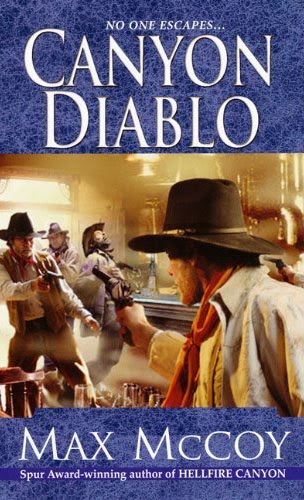
Canyon Diablo

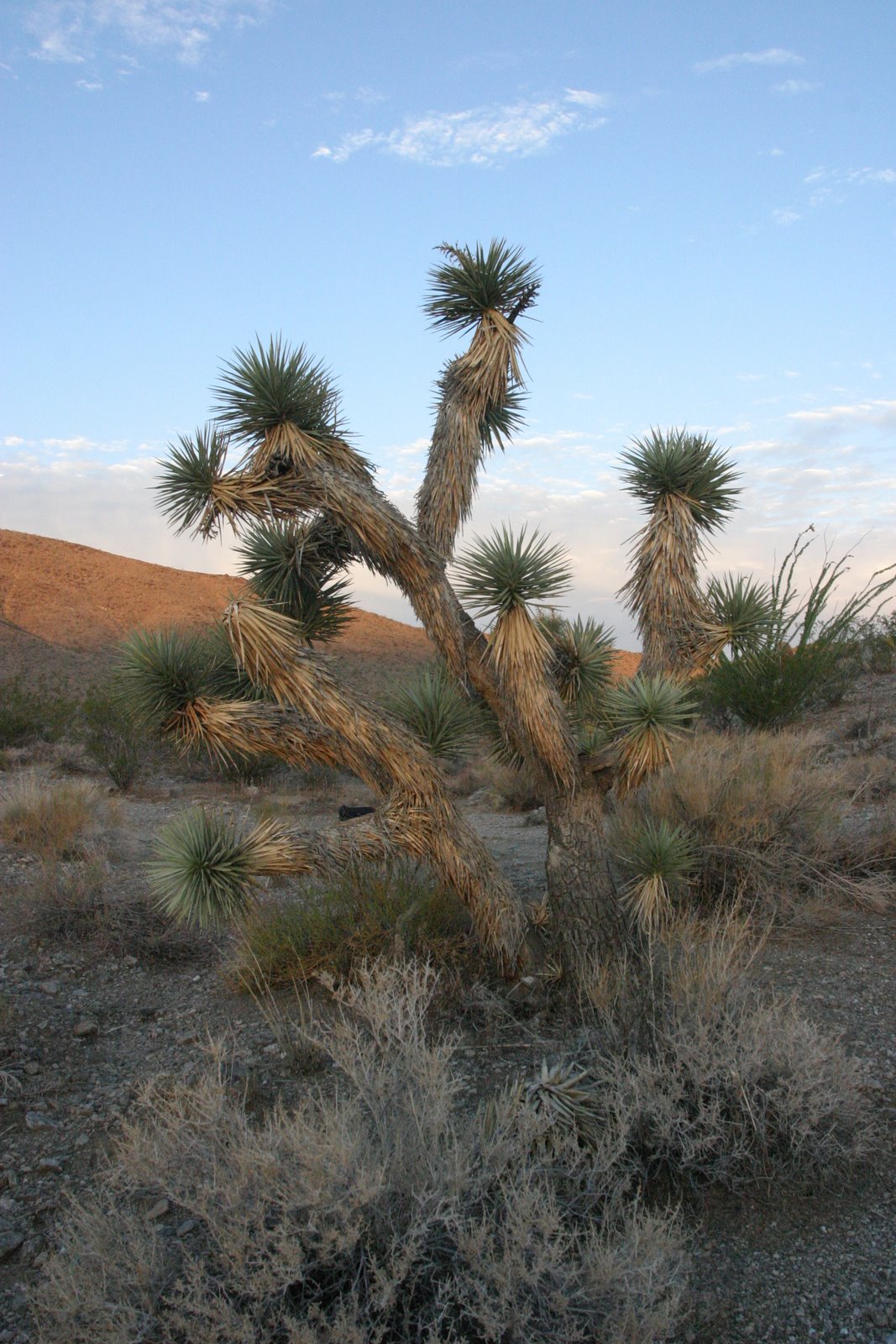
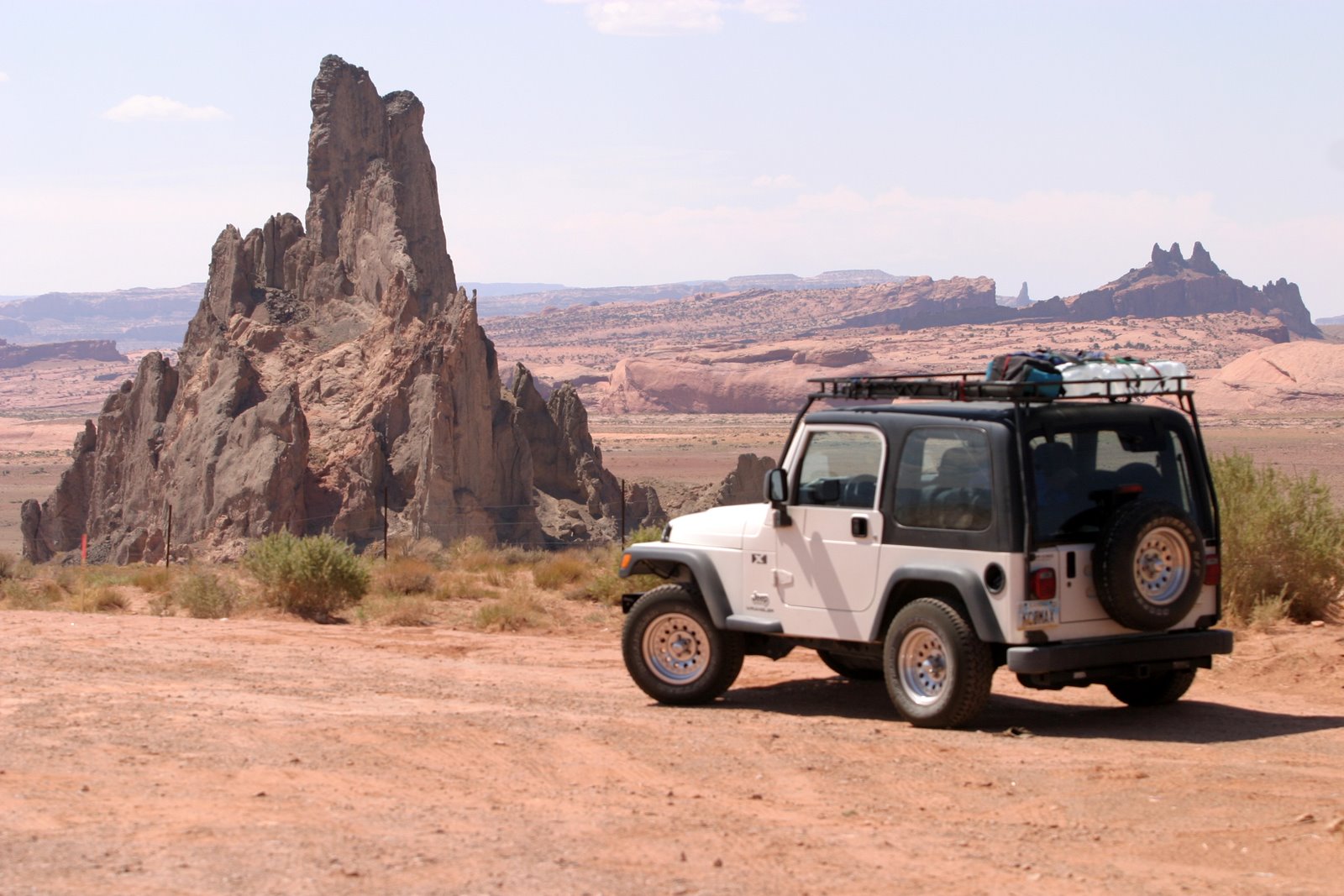
Here's the setting for the sequel to HELLFIRE CANYON. It's called Canyon Diablo, and it's a ghost town now, but in the 1880s it was considered by some to be the meanest town in the west. My editor and I visited the location on June 11, on our way to Scottsdale. Below is a shot of my Jeep, El Cabrito Loco, at the rim of the canyon, the ruins of a rock building nearby, and a photo showing the old Route 66 bridge crossing Canyon Diablo. The site is on the Navajo Reservation, and there are plans to turn the ghost town into a tourist attraction.


Friday, July 18, 2008

Postcard IV

This could be the cover shot for a book. A psychotic, psychedelic, angst-filled morality tale of fear and ambition in the Arizona desert. Or a book about yard sales.

Postcard III

An establishing shot. Below, my astute editor and traveling companion Ice G finds an anti-establishment message.

Postcard II

More from Two Guns. We were on our way to the Western Writers of American convention at Scottsdale. The maniac below is my editor, Ice G. We were, by this time, baked by the Arizona sun.


Postcard from the Edge

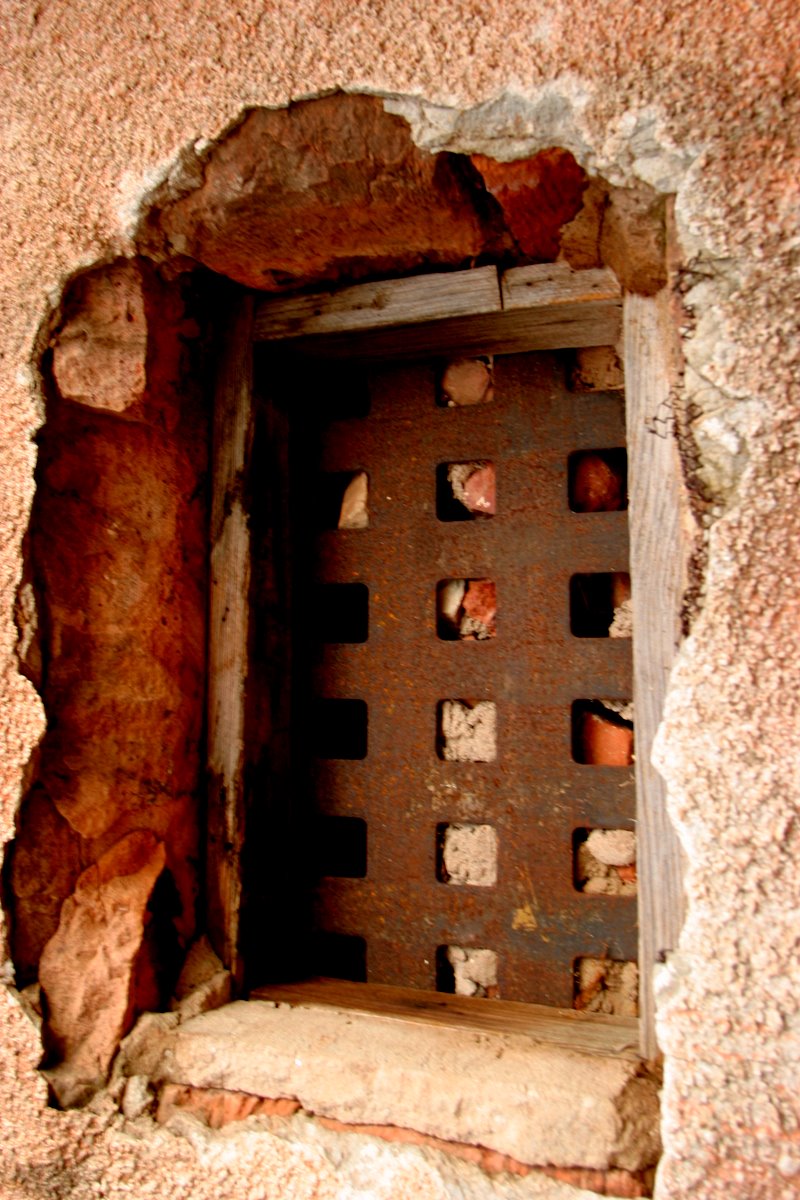
Long time no blog. Busy. Have lots of photos from the road trip through Colorado, Arizona, and New Mexico in June to share. This photo was taken by my editor, Gary (also known as Ice G) at an abandoned KOA on the road leading to the ghost town of Canyon Diablo. I have no idea what the grafitti means, but it is visually interesting. There's a skull, the Spanish word for lord or master, and a chess piece, maybe a bishop.... The place is between Flagstaff and Winslow on I-40, at the Two Guns exit. It is literally an exit to nowhere. There's no town, no paved roads, nothing. Except art.

Monday, June 30, 2008

Reflected light

Here's what may be my favorite photo from the WWA Convention at Scottsdale, and it was taken by my friend Red Shuttleworth with a disposable camera. I'm with my daughter, Meg, outside the convention center just before the Spur Awards banquet. Red is a poet from Moses Lake, Washington. A few years ago, he was the very first to win a Spur for poetry. He also has 1,320 friends on My Space. I have 18, including some guy named Tom. He blesses all of his friends with poetry bulletins. Here's the first couple of lines of his latest:

Buffered with cheap whiskey, an old man carries a 1960
Pee Wee Soccer Championship medal in his pocket.

By late afternoon he will hand it to a weeping boy
abandoned on a baseball diamond by his friends.

Go make friends with Red. He's a compulsively likeable fellow and true. And, he'll tell you a story. Or take your picture with your daughter when you need to see yourself reflected in the eyes of someone you love.

Sunday, June 29, 2008

Scribo* goes silent

My friend Phillip Finch has discontinued his blog, Scribo* -- although I had already suspected as much, because the blog has been down for some time. Phil confessed during the annual Tallgrass Writing Workshop that had pulled the plug because it was a time sink. I've had the same fears about this blog. Whenever I post, I feel guilty. There are so many other things to do. And while I started out wanting to make it a photo blog, it has devolved into some weird cross between marketing and journaling, and does neither well. But, I won't give up just yet. Now that the hellish schedule of traveling and conferences that is June is all but past, I can see some time at the end of the tunnel. So, as a farewell (I hope temporarily) to Phil's blog, here's the cover of one of his novels, Sugarland, released in 1991 by St. Martin's Press. It is a first-rate book.

Voynich News reviews PHILOSOPHER'S STONE

Here's one of the more surprising reviews I've come across. It was posted last month in the geeky Voynich News blog, a sort of pop culture monitor of things related to the mysterious manuscript. If you don't know what Voynich is, then nevermind. You wouldn't get it anyway.

Review of Indiana Jones and the Philosopher's Stone...

No, not the
2008 film (though that too has a crystal skull-based storyline): I'm talking about the 1995 book by Max McCoy, which Bantam have just (May 2008) reissued apropos of nothing (apart from perhaps trying to surf the wave of the film's gigantic marketing spend?)

The Voynich Manuscript makes its appearance very early on (p.27, actually the first page of Chapter 1): McCoy manages to present its history very lightly and not bog the reader down in too many details. But as the book is set in 1933, there wasn't a whole UFO angle to cover (or other such modern confections). Instead, you get a little bit of Newbold, Bacon, alchemy, Major John M. Manly (!!!), John Dee, Kelly, the Shew Stone, and even a quick reference to Wilfrid Voynich in New York: basically, everything moves briskly along in the kind of proper screenplay-like way you'd hope from an Indy novel. Yes, there's even the occasional snake (for readers playing Indy buzzword bingo, I guess).

I'll admit it: I was charmed by the book. It's small (293 pocket-size pages), no larger than you'd imagine a Japanese commuter squeezing into a pocket, and reads so quickly that at some points (most notably in the end sequence past the oasis) I deliberately closed my eyes to slow the pace down so that I could properly picture the scene in my mind.

Historically, the book has a deliciously light touch throughout, in particular when Indy and his companion are improbably rescued by an elderly French couple called Nicholas and Peronelle (p.200) - and if you can't work out who they are by that stage in the story, you very possibly deserve to be shot.

Thanks, Voynich News, for noticing. And sorry for calling you geeky.

Wednesday, June 18, 2008

Hardware

The Spur Award I was given for Hellfire Canyon on Saturday, June 14, at the Western Writers of America convention at Scottsdale, Ariz.

Saturday, June 14, 2008

Scottsdale signing

Here's a photo taken by my daughter Megan at the Western Writers of America book signing Saturday night at the Barnes & Noble at Scottsdale, Ariz. I'm sitting with Spring Warren, who is signing me a copy of her novel, Turpentine. Spring's novel was a Spur Award finalist. They placed us in front of the magazine rack, which seemed to annoy some customers. Spring comes by her name honestly, by the way -- she says her siblings are Meadow and Summer.

Thursday, June 12, 2008

Five Points

A few days ago, on my way to a writing workshop at Gunnison, I paused at Five Points along the Arkansas River. It was a rainy, overcast day, and there were a few rafts on the river, and I took this photo with my Canon EOS 10D with a 70-200 2.8 L-series lens. It was just a grab shot, but I like the expression of the girl in the front of the raft. This apparently isn't everybody's idea of fun.

Saturday, May 31, 2008

HELLFIRE CANYON a Kansas Notable Book

I haven't been in my office at school for a few days because I bought a terrific old Victorian house on Constitution Street in Emporia and have been busy hauling a zillion pounds of books and tools and guitar amplifiers into it from the places they've been stored for the past couple of years. When I did go into today (Saturdays are quiet and I can get some work done), I found a letter waiting for me from Christie P. Brandau, the state librarian of Kansas.

Hellfire Canyon has been named a 2008 Kansas notable book.

"The Kansas Notable Books list was created to recognize the literary richness of our state," Brandau wrote. "It is a project of the Kansas Center for the Book at the State Library of Kansas. The annual selection of fifteen books reflecting Kansas cultural heritage features high quality titles with wide public appeal that are either written by a Kansas resident or about a Kansas-related topic. A committee considered the universe of eligible books published in 2007 and met over the course of several months to evaluate and discuss titles. The culmination of the commitee's work was a recommended list presented to the State Librarian for final decision.

"As a Notable Book author you are invited to participate in several events, including a reception at the State Library this summer at which the award will be presented by Governor Kathleen Sebelius (date to be announced), and a reception on Friday, September 26, 2008, in Lawrence on the eve of the River City Reading Festival."

Hellfire Canyon also won the Spur Award for best original paperback from the Western Writers of America. I'll received that award next month at the WWA Convention in Scottsdale, Ariz. My editor, Gary Goldstein, will also accept the award on behalf of Kensington Books.

I'm heading for the Writing the Rockies workshop at Western State College in Gunnison, Colo., in a few days, to give the keynote address. Then, I'm picking Gary up at the airport in Denver and we're going to road trip it to Scottsdale. Along the way, we're going to discuss a sequel to Hellfire Canyon, which might be called Canyon Diablo.

My association with Gary goes all the way back to The Sixth Rider, which was published by Doubleday in 1991 and won the Best First Novel award from WWA. Although that book was acquired by Greg Tobin, Gary was the line editor.

Monday, May 19, 2008

I, QUANTRILL review

Jeremy Jones reviewed my new book in last Sunday's Spartanburg (S.C.) Herald-Journal. Here, in part, is what he had to say:

Once a year, Max McCoy writes a novel in which he takes an iconic figure and peels back the layers of myth and legend to reveal a decidedly more interesting human being underneath.

"I, Quantrill," released this past week by Signet, is his 17th and, perhaps, his best book yet.

Over the past two decades, McCoy has had Jesse James tell his story through Mark Twain; he has sent an anxious Wild Bill Hickok to his first gunfight; and he has launched Indiana Jones' quest for the crystal skull.

McCoy is the author of historical Westerns, thrillers and four original Indiana Jones adventures. Earlier this spring, the Western Writers of America awarded "Hellfire Canyon," the Spur Award for best paperback original novel... McCoy has a way of clarifying complex subjects without oversimplifying them. His novels are thick with plot, alive with strong characterization, and rich with historic detail.

He goes on to quote Johnny D. Boggs:

"Max McCoy has a love for language," said South Carolina novelist Johnny D. Boggs, author of "The Hart Brand" and the Spur Award-winning "Doubtful Canon." "There's a rhythm to his sentences, great word choices, a wonderful cadence, superb imagery. His stories often flow like the lyrics to a good song. I'll often find myself reading his sentences two or three times because I admire them, and I'm trying to figure out how he does it."

Who can argue with that?

McCoy's decision to use a reviled (or revered) historic figure as a first-person narrator immediately engorges "I, Quantrill" with tension by putting the reader inside Quantrill's head and building a level of intimacy between reader and narrator that is both exciting and disturbing.

"Max McCoy is one of the top writers at work today in the Western field," Boggs said. "Max does sound historical research, and he puts his own twist in his novels. He has this knack for bringing historical figures to vibrant life, whether it's Wild Bill Hickok or Jesse James. He shows them for what they were: humane yet savage."

You can read the review in its entirety here.

Tuesday, May 13, 2008

"... but the movie'd make swillions!"

The following review came out in the June 29, 2007, issue of DIVER and it's by Phil Nuytten, the magazine's senior editor and the guy who invented the Newtsuit. Being busy with life, I missed the review. Also, it was three years since the release of The Moon Pool, so I really wasn't looking for it. But, I stumbled across the review yesterday on the Web, so here it is.

The review isn't all gravy. Nuytten calls MP an "obvious piece of pulp fiction" (ouch!) and takes exception to some of technical stuff. Still, it's a good, honest review. And he seems to like it. Besides, who could argue with Phil Nuytten?

First, the hype from the publisher:

“Time is running out for Jolene. She’s trapped, naked, waiting only for her worst nightmares to become reality. Her captor is keeping her alive for twenty-eight days, hidden in an underwater city 400 feet below the surface. Then she will die horribly – like the others….”


The question is: why are we reviewing a piece of obvious pulp fiction in DIVER Magazine? And the answer is that this particular piece of trash is actually a pretty good read. Book reviews of this type often start out with some version of “It’s a crackin’ good yarn” – from the same cliché pool as “It was a dark and stormy night…” This review of Max McCoy’s techno-suspense thriller ‘The Moon Pool’ is no exception, except that it would be more accurate to say that “It’s a crackin’ weird yarn”.

‘Moon Pool’ takes its hat off and waves it at the Thomas Harris international best-seller “Silence of the Lambs” for premise and character types. It hallucinates in somewhat the manner of Carlos Castenada’s efforts and has bits reminiscent of Carl Hiassen or Elmore Leonard’s Florida-based master-trashies. It combines some off the wall humor with genuine cave-diving expertise, leading some to conjecture that author McCoy might have been influenced, or even partially corrupted by Cavin’-Maven Wes Skiles! (Ah, the wonderful pomposity of multiple literary references!)


Max McCoy is the award-winning author of nine books prior to ‘Moon Pool’. He’s a skilled, professional writer with a good handle on craft as well as style. There are a lot of ingredients in the Moon Pool omelette, but he deals with them in a deft manner. The long and short of it that this novel is well written. As I said, the guy is a pro. Like any good artist or composer, he knows exactly where to leave spaces that the readers can color in for themselves. Consider this piece of dialogue as the giant cavern’s topside supervisor talks to the French pilot of a mini-submersible called ‘Water Baby’:


“Bonjour”


“Welcome to the good earth,” McAfee said in French. “It is December fourteenth, the time is sixteen forty Zulu, and the temperature is always seventeen degrees. It’s wet here, but it never rains. We thought you might like to start with an orientation tour of Mineral City first. You can begin your descent as soon as our divers have released the cable and completed their visual check. In the meantime, is there anything you require?”


McAfee listened for a moment.


"But of course. Red or white?"


No biggie, but a good example. There’s also a dash of Robert Heinlein, or perhaps it’s more Appleton’s ‘Tom Swift’ in a couple of the story’s props: items that don’t actually exist (or no longer exist). The author thinks that these imaginary things could, or should, exist because the underlying principles are known and used today. Unfortunately, McCoy has left out a couple of critical limitations in the principle description. But, hey, Jules Verne did exactly the same thing in his description of Captain Nemo’s undersea rifles – after all, this stuff is fiction, not an owner’s manual! (Remember this when you come to the ‘super-cavitating metal dart or the “Birns and Sawyer” quartz lighting.) In fact, Moon Pool is technically pretty darn accurate, without showcasing the author’s technical knowledge at the expense of the story. One major techno-glitch involves the submersible ‘Water Baby’ being required to hold 200 PSI internally. Sure, there are radial ‘piston’ seal hatches with mechanical breech locks that will tolerate even higher pressure differentials from either side – but they are complicated, expensive and, worst of all, heavy. In practice, they are not used on the type of submersible that McCoy describes. Conventional submersible hatches and, in particular, standard view-ports will not tolerate the pressure differentials he needs for the storyline. At least it would be unlikely. Most unlikely.


McCoy knows that the standard sub design is a problem and, I’ll be darned if he doesn’t use it as a plot device! The pressure diff is critical to the story’s whirlwind ending: will it hold? Or will it ‘blow up good’ and atomize the hero and the shapely young thing that he has just untied from the railroad tracks? We thought our guy’d had it for sure a couple of times, but the author plucked him out of harm’s way with a couple of artful dodges, but this time… well, odds are that he and the naked lady ( yep, she’s nekkid as a new-born chick!) who he’s in the midst of salvaging, have truly had the biscuit! I mean, com’on. There’s no way they’re going to get out of this one… how can they?


Read the book.


P.S. If someone doesn’t make this puppy into a movie, they’re missing a bet. Think ‘Sea Hunt’, ‘American Pyscho’ and ‘Survivor’ mixing it up in ‘The Cave’ – whilst a bevy of nekkid, red-headed beauties arranged in Busby Berkeley synchronized-swimming- style circles look on. (True, they’re dead – but that makes the nudity kinda “art”, right?) The book may be a good read, but the movie’d make swillions!


I don't know exactly what a swillion is, but I'd like to find out. Now, go buy a subscription to DIVER!

Sunday, May 11, 2008

I, QUANTRILL Kindle edition

My new novel was released this week as an Amazon Kindle Edition. What's Kindle? Well, its a wireless digital delivery system that uses an electronic reader. It uses the same technology as your cell phone, so you don't need to find a WiFi hotspot -- you just need to be in range of a cell tower. And, Amazon promises, at no added fee beyond the purchase price. Here's the description from Amazon:

Three years ago, we set out to design and build an entirely new class of device—a convenient, portable reading device with the ability to wirelessly download books, blogs, magazines, and newspapers. The result is Amazon Kindle. We designed Kindle to provide an exceptional reading experience. Thanks to electronic paper, a revolutionary new display technology, reading Kindle’s screen is as sharp and natural as reading ink on paper—and nothing like the strain and glare of a computer screen. Kindle is also easy on the fingertips. It never becomes hot and is designed for ambidextrous use so both "lefties" and "righties" can read comfortably at any angle for long periods of time.

We wanted Kindle to be completely mobile and simple to use for everyone, so we made it wireless. No PC and no syncing needed. Using the same 3G network as advanced cell phones, we deliver your content using our own wireless delivery system, Amazon Whispernet. Unlike WiFi, you’ll never need to locate a hotspot. There are no confusing service plans, yearly contracts, or monthly wireless bills—we take care of the hassles so you can just read.

So, you might ask, what do I think of Kindle? I don't know. It costs $400 bucks. I'm a little reluctant to part with four bills to see if this little device is all its promised to be -- you could buy a cheap laptop for that. So, if you have $403.79 burning a hole in your pocket ($399 for the Kindle, free shipping, and $4.79 for I, QUANTRILL) buy the gizmo and let me know. Tell me if you liked the novel and post a review on Amazon. And if you don't have that kind of disposable change, you could just spend $5.99 for my novel, which requires no batteries and you can slip in your back pocket without fear of sitting and breaking it.

Sunday, April 20, 2008

The Surreal McCoy

I was at Borders in Overland Park recently buying a Jodi Picoult novel for my eldest daughter (Nineteen Minutes, which debuted last year at #1 on the Times list) when I passed the prominent New Paperback table in the center of the store and there they were: My Indiana Jones novels. It has always made me feel a bit surreal to see my books on display, and being confronted by my cycle of Indy adventures, with the new covers with the raised lettering, magnified the effect. Then, on the way back home to Emporia, I stopped at a Dillon's store for a half-gallon of milk and again I passed the Indy books, in the middle of shelf of paperbacks you pass before you get to the checkout. Now, I suppose this should no longer surprise me. I knew Random House was bringing back the novels in time for the release of Indy IV. But I didn't think they'd be everywhere. No, it's not like debuting at the top of the Times list. But it's not like selling books out of the trunk of your car, either.

Tuesday, April 1, 2008

Sunshine in court

Our friends at the Federal of American Scientists Project on Government Secrecy have posted about The Sunshine in Litigation Act, which seeks to prevent court-approved secrecy agreements from hiding information that may be vital to the public health and safety. For more on the proposed legislation, including a link to the PDF of the Senate hearing on the bill, go the the FAS website.

Monday, March 31, 2008

First person paternal

My friend Phillip Finch at Scribo* is putting me to shame when it comes to blogging photos, so here's my attempt to keep up. Here's an image of a talented young singer and actor I took over the weekend at a community theater performance. The lens was a 70-200 Canon L series, the body a 10D, and exposure 2.8/250. Technically the shot could be better -- it isn't as sharp as it should be, considering the glass I was using -- but I like the mood. I hope the young woman likes it.